Battlefield 6 - ULTIMATE Helicopter Guide! How to Fly the Helicopter!
The scene is tragically familiar. The rhythmic whump-whump-whump of rotor blades fills your ears as you ascend, a fleeting sense of power swelling in your chest. You push the stick forward, eager to rain fire upon the battlefield. But then, something goes wrong. The nose dips too far, the ground rushes up with sickening speed, and the triumphant ascent ends in a chaotic, fiery explosion. For most aspiring pilots in Battlefield 6, this is the beginning and end of their story in the sky—a frustrating cycle of spawn, crash, repeat.
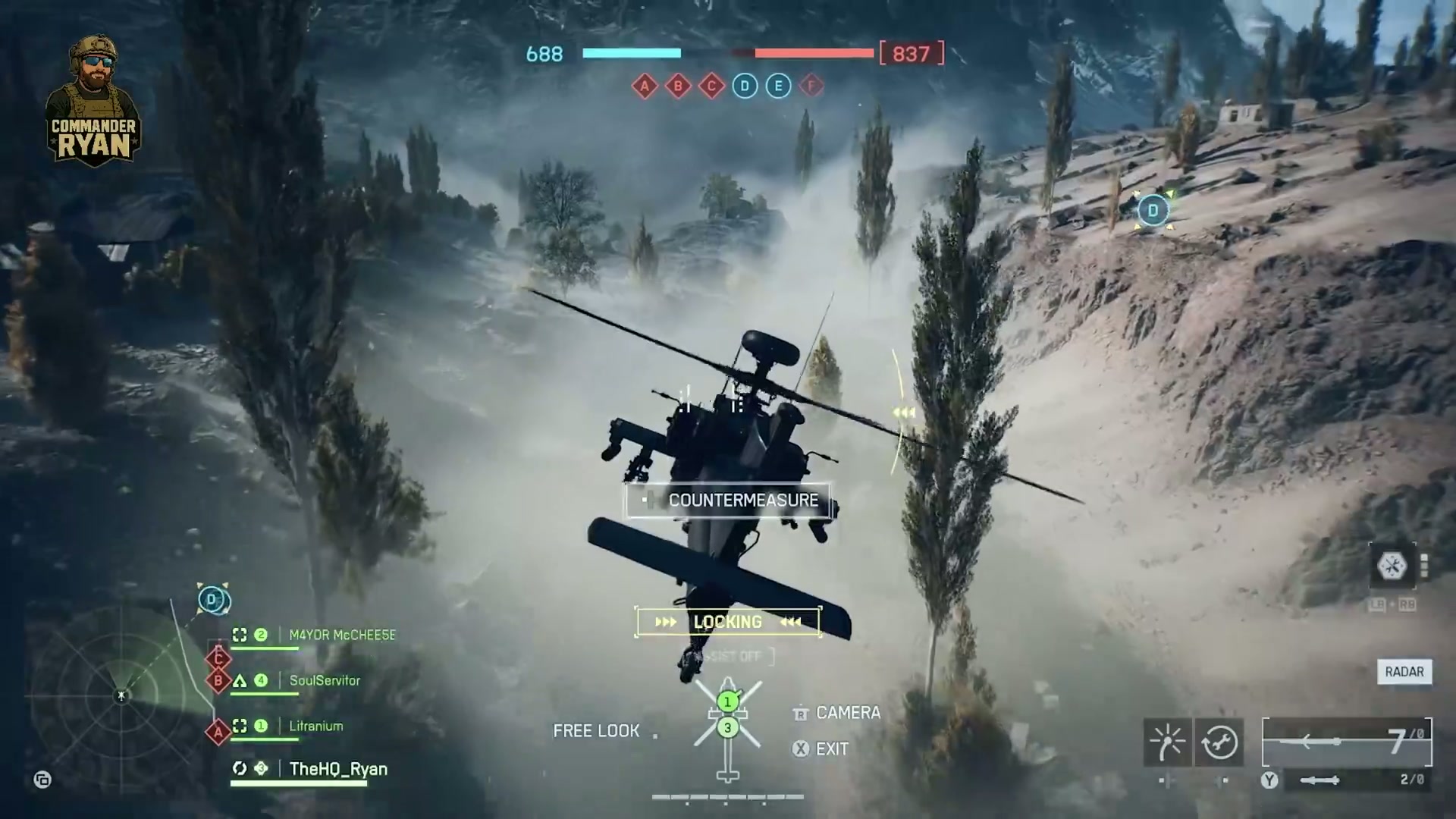
Yet, we have all witnessed its opposite: the ace pilot, a phantom of steel and thunder, who doesn't just fly but owns the sky. Their helicopter moves with an unnatural grace, weaving through structures, hovering with impossible stability, and then unleashing a devastating barrage before vanishing over a ridge. The gap between the novice and the master seems impossibly wide, a chasm of complex controls and arcane knowledge. But the truth is far simpler and more profound. Mastering the helicopter is not about memorizing button layouts; it's about internalizing a single, counterintuitive principle about gravity, momentum, and control—a principle that, once understood, will forever change the way you fly.
The Pilot's Paradox: Why Pointing Up Makes You Fall
The starting point of all this lies in unlearning your most basic instinct. When you want to gain altitude, you point up. This is true for climbing a hill, for looking at a skyscraper, for launching a rocket. But in a helicopter, this instinct is a lie. It is the single greatest misconception that keeps pilots chained to the earth. Most players believe that tilting the nose of their aircraft upward will cause it to climb. The reality could not be more different.
To understand the logic behind this, we first need to separate two distinct functions: lift and thrust. Your throttle control is what generates lift, pushing your helicopter directly up, away from the ground, or allowing it to descend. This is your vertical axis. The nose of your helicopter, however, governs your horizontal thrust and direction. When you tilt the nose down, you are directing the rotor's force backward, propelling the aircraft forward. The steeper the downward angle, the faster you move.
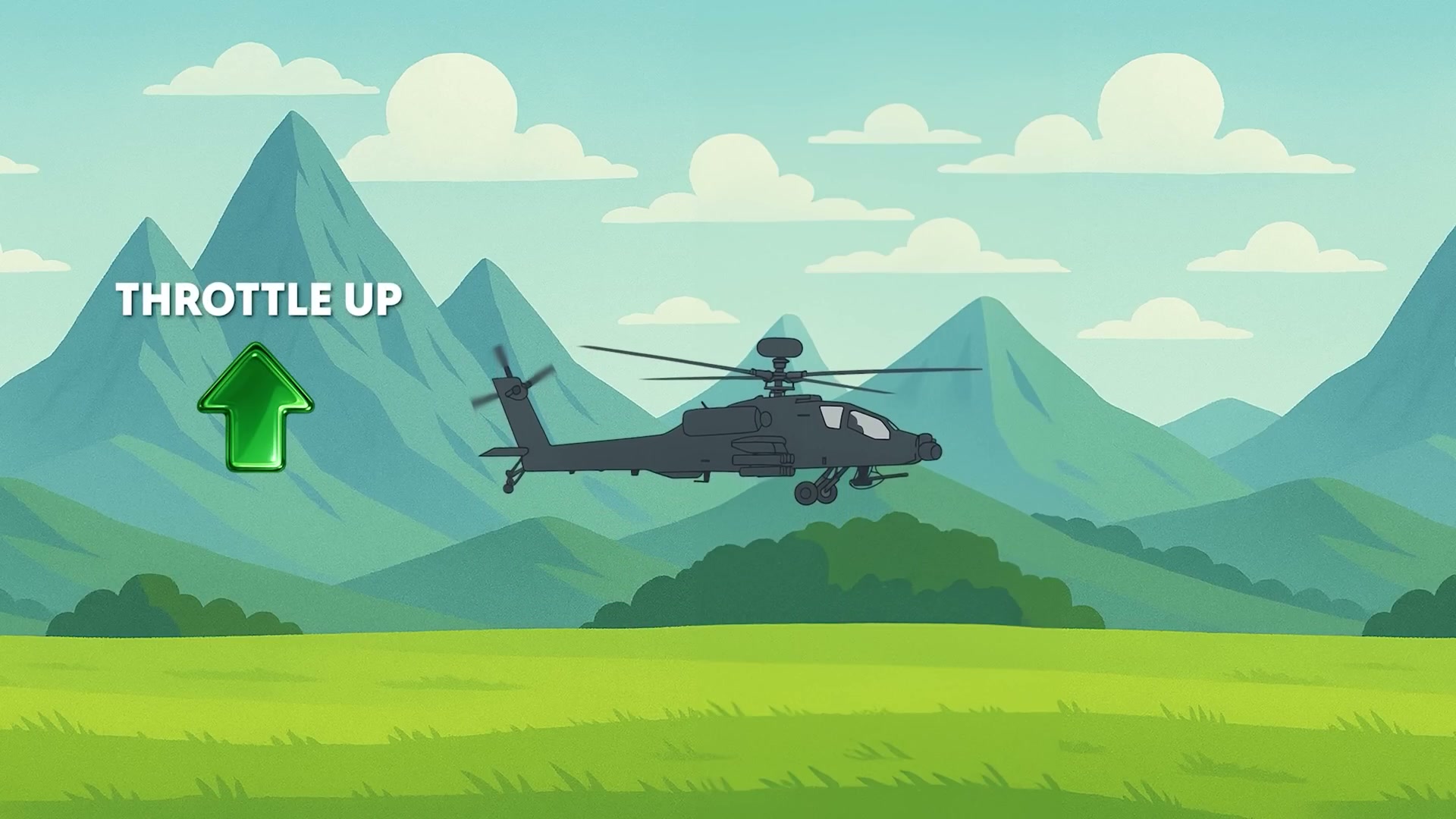
Herein lies the paradox. If tilting the nose down moves you forward, then tilting the nose up does the opposite. It acts as a powerful air brake. Pulling back on the stick will cause your forward momentum to bleed off until you come to a complete hover. If you continue to hold the nose up, the helicopter will actually begin to move backward, falling through the sky tail-first. This isn't a glitch; it's the fundamental language of helicopter flight. Nose down is your accelerator. Nose up is your brake and your reverse. Mastering this golden rule is the first true step to unlocking the power of flight.
The Unseen Tether: Balancing Speed, Altitude, and the Inexorable Pull of the Earth
Merely understanding the function of the nose isn't enough, for it introduces a new and dangerous variable: the invisible interplay between speed and altitude. Every aggressive forward movement, every steep dive with the nose pointed down, comes at a cost. While you are gaining speed, you are inherently sacrificing lift and losing altitude. The faster you push forward, the faster the ground pulls you in. This is the unseen tether that causes so many high-speed crashes.
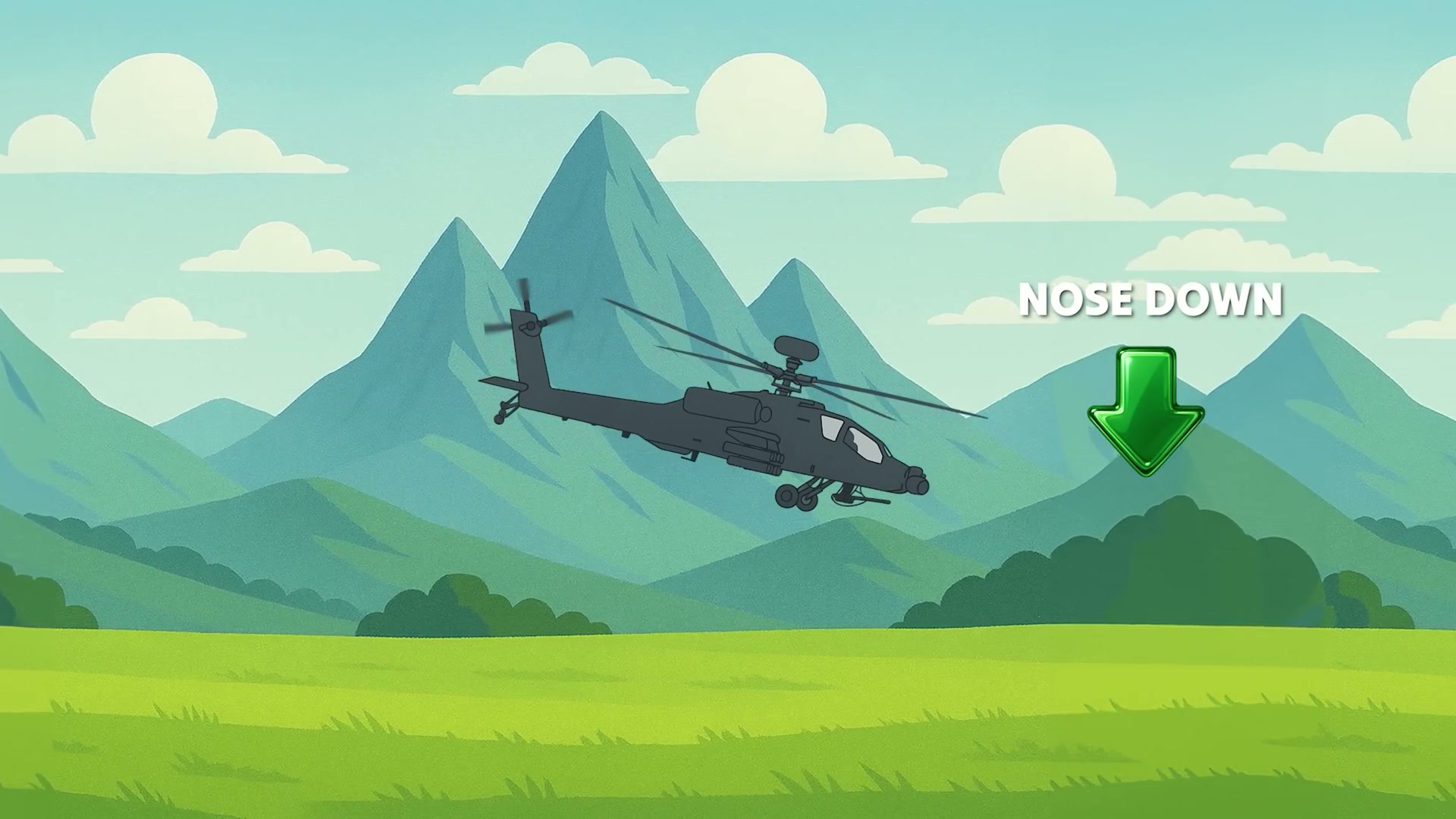
Flying a helicopter, therefore, is not a series of isolated commands but a constant, fluid dance. It's a perpetual balancing act between nose position and throttle input. As you tilt the nose down to accelerate toward a target, you must simultaneously be prepared to feed in throttle to counteract the resulting altitude loss. Think of it as a constant conversation with gravity. You say, "I want to move forward quickly," and gravity replies, "Then you must give me some of your height." Your throttle is how you negotiate that deal.
This dynamic becomes even more critical when avoiding obstacles or pulling out of a steep dive. The instinct is to yank the nose up sharply. But as we've established, this kills your forward momentum. The true key is to blend the two controls: gently pull the nose up to level out while simultaneously applying throttle to regain the altitude you've lost. This rhythmic give-and-take between nose and throttle, aggression and lift, is the very soul of helicopter maneuverability.
The Phantom in the Cockpit: The Art of the Solo Seat-Switch
Once you have mastered the physical dance of flight, you can begin to explore the strategic possibilities that true control unlocks. Perhaps the most devastating tactic, one that separates good pilots from unstoppable ones, is the art of becoming a two-person army in a single machine. The helicopter features a pilot seat and a secondary gunner position, each with a unique and powerful arsenal. While designed for cooperative play, a lone wolf can exploit this design to achieve an astonishing increase in firepower.
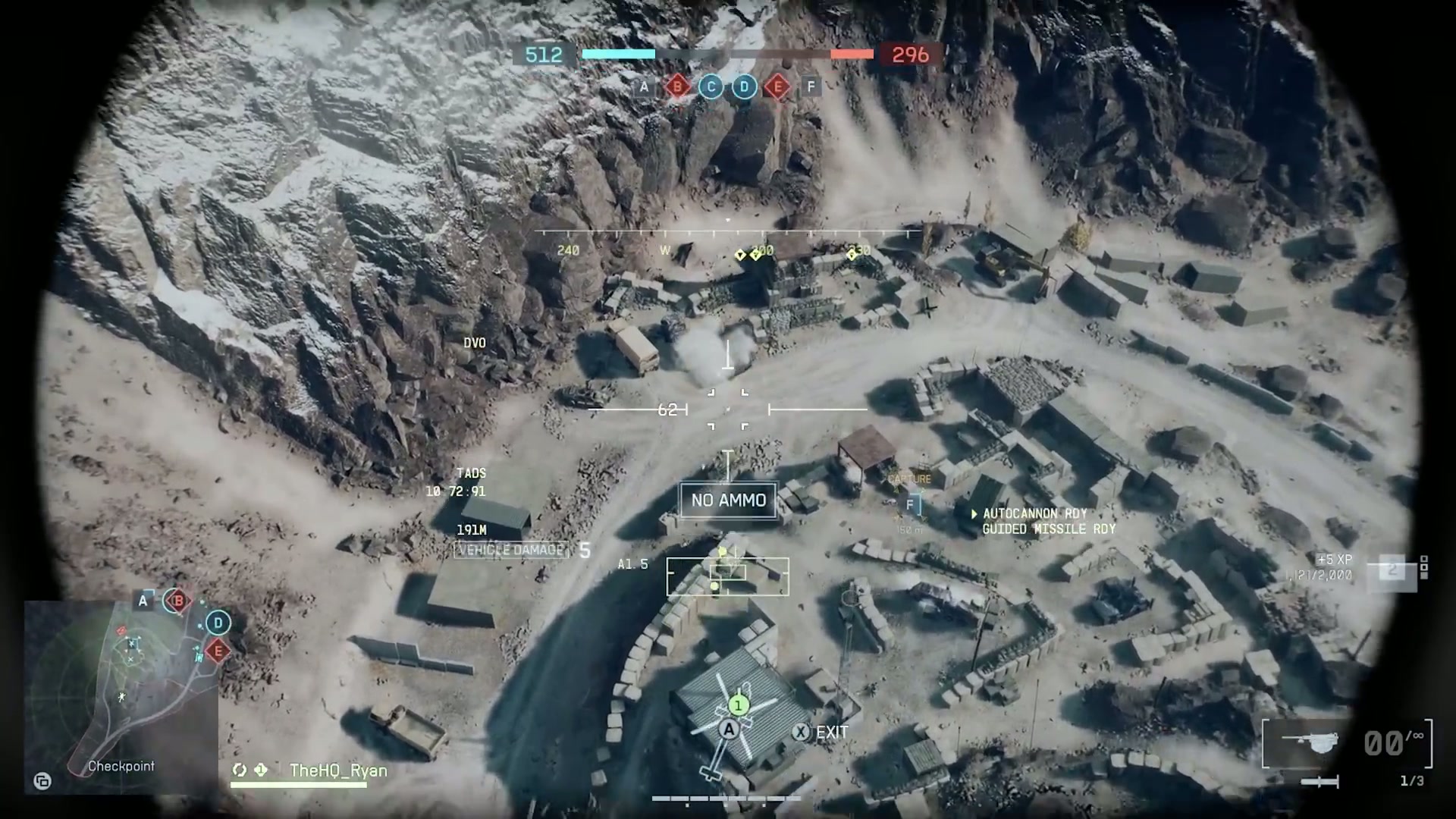
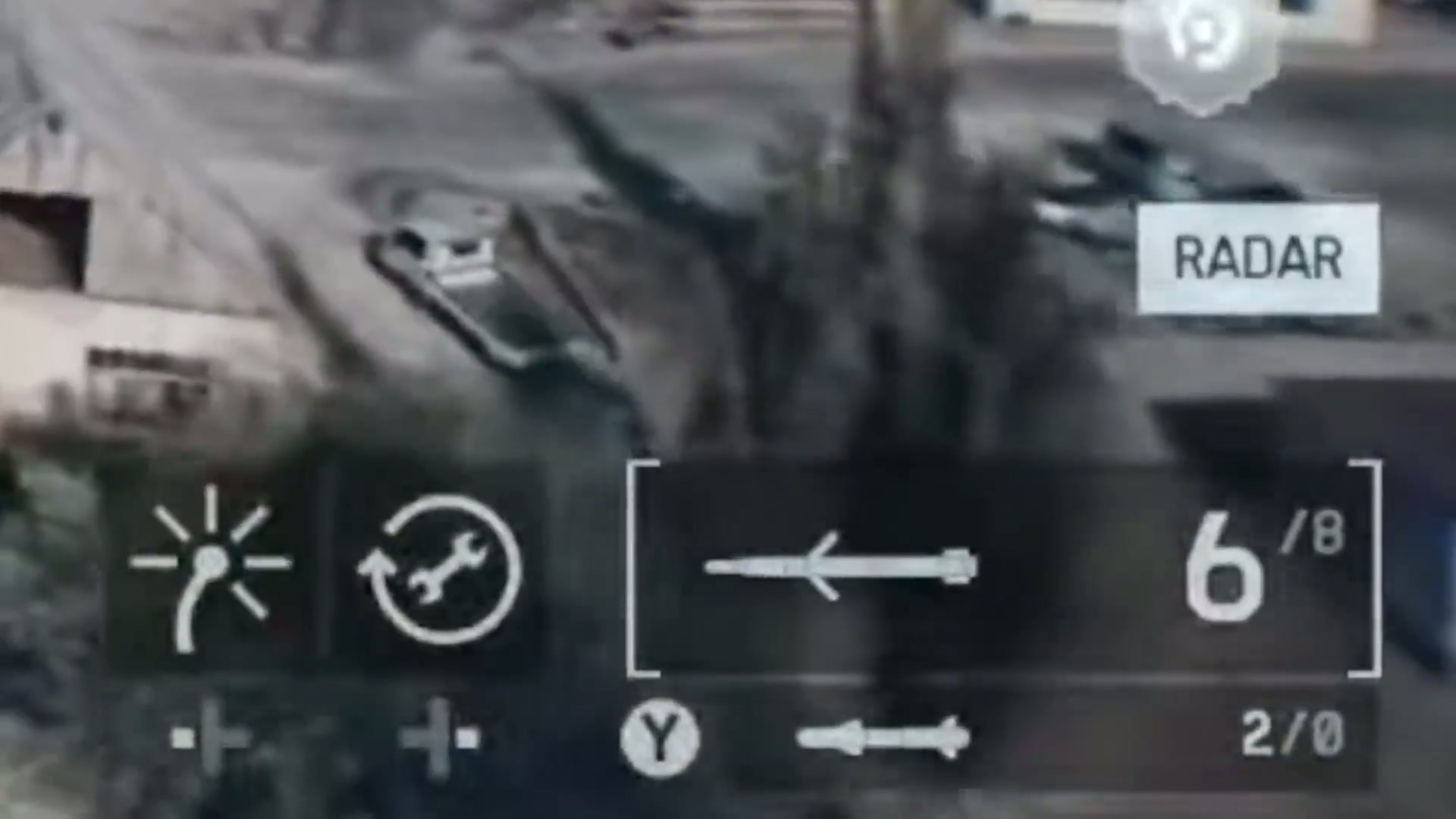
The technique is as audacious as it is effective: while in stable, high-altitude flight, you switch from the pilot's seat to the gunner's. For a few precious seconds, the cockpit is empty, and your helicopter is a falling piece of metal. But in that window, you gain access to the gunner's high-explosive cannon, a weapon capable of obliterating entire squads of infantry in a single pass. After unleashing hell, you switch back to the pilot's seat just in time to pull the helicopter out of its descent, regain altitude, and reposition for another strike. This maneuver effectively doubles your offensive capability, allowing you to cycle between the pilot's surgical anti-vehicle missiles and the gunner's overwhelming anti-infantry cannon. It is a high-risk, high-reward strategy that transforms you from a mere pilot into a one-person air dominance platform.
The 'Vector Dance' Framework: A Mental Model for Aerial Supremacy
The individual skills of nose control, altitude management, and seat-switching are powerful, but their true potential is only realized when they are integrated into a single, cohesive mental model. We can call this the "Vector Dance" framework, an approach to piloting that prioritizes fluid adaptation over rigid execution.
The framework is built on a continuous loop of three core components. The first is Vector Control, which is the conscious manipulation of the helicopter's nose to dictate speed and direction—forward for attack, up for braking, and neutral for hovering observation. The second is Altitude Management, the constant application of throttle not just to go up or down, but to actively counteract the altitude loss from aggressive vector changes. It's the sustaining rhythm that keeps the dance going. The final component is Strategic Firepower, the awareness of your full arsenal and the decisive choice of when to use the pilot's precision weapons or when to execute the high-risk seat-switch to deploy the gunner's area-denial cannon.
By thinking in terms of this framework, you stop reacting to the battlefield and begin to dictate the terms of engagement. You are no longer just flying; you are conducting a symphony of movement and destruction, seamlessly transitioning between speed, stability, and overwhelming force.
The Sky Is Not a Place, But a Conversation
We return to the image of the falling helicopter. The spiraling wreck is not a failure of reflexes, but a failure of understanding. The pilot was trying to command the machine, to force it to obey their will. But a helicopter cannot be commanded; it must be conversed with. The sky is not a place you conquer, but a medium through which you move by respecting its rules.
The secret to flight in Battlefield 6, and perhaps to mastering any complex skill, lies in identifying the one counterintuitive truth that governs the entire system. Once you understand that pointing down is 'go' and pointing up is 'stop,' the entire language of the machine opens up to you. You are no longer fighting gravity; you are dancing with it. The next time you step into the cockpit, don't just grab the controls. Take a breath, remember the paradox, and begin the dance.
Source of Inspiration: Open World Games Original Video: https://www.youtube.com/watch?v=o4aDYRz-wkg